May 31, 2024
Compensation for Ukraine: results of the second year of work on creating compensation mechanisms
The results of the first year of work to compensate Ukraine for damages caused by Russian aggression are available here.
On May 18, 2022, a Presidential Decree established a Working Group on the Development and Implementation of International Legal Mechanisms for Compensation for Damage Caused to Ukraine as a Result of the Armed Aggression of the Russian Federation (hereinafter referred to as the “Working Group”). Although the issue of providing compensation to Ukraine has been discussed almost from the very beginning of the full-scale war, this date can be considered the beginning of official work by Ukraine and the allies to this end.
Traditionally, the Dnistrianskyi Center publishes the results of another year of work on the creation of a compensation mechanism for Ukraine prepared by the Center’s experts.
The key efforts in this area in the period from May 2023 to May 2024 were focused on three main areas:
- Creation of an international compensation mechanism for Ukraine and launch of the Register of Damages caused by the Russian Federation’s Aggression against Ukraine (hereinafter referred to as the “Register of Damages”).
- International discussions on the possibility of confiscating sovereign Russian assets frozen abroad and using them for the benefit of Ukraine.
- Confiscation of Russian assets in Ukraine based on the case-law of the High Anti-Corruption Court (HACC).
Below, we will analyze the main achievements and challenges facing Ukraine and its allies in each of these areas.
Creation of an international compensation mechanism
The creation of an international mechanism to compensate Ukraine for the damage is a priority of Ukraine’s foreign policy. Ukraine does not consider any other options for organizing and conducting the reparations process than through the creation of such a mechanism.
"Compensation mechanism for the damages caused should be set up through a multilateral international instrument", - is declared in the Peace Formula of the President of Ukraine Volodymyr Zelenskyi.
During the first year of the effort to secure compensation for Ukraine, the Working Group, headed by Andriy Yermak, Head of the Presidential Office, led the way, and now has 25 members. The members of the Working Group are Ukrainian officials, as well as a number of well-known foreign lawyers specializing in international law.
However, despite the reputable names in the composition, it can be argued that it is unbalanced in terms of representation: as of May 2024, there is no representative of the judiciary, only one representative of the legislative branch (People’s Deputy Serhii Vlasenko), and the Cabinet of Ministers is represented only by Deputy Foreign Minister Andrii Sybiha and Ambassador-at-Large of the Ministry of Foreign Affairs Anton Korynevych[1]. Similarly, there are no representatives of Ukrainian academia or civil society.
While the latter can be justified by the closed nature and sensitivity of the process, the disproportionate representation of different branches of government may reduce the effectiveness of efforts to create such a mechanism. International cooperation in the field of justice and parliamentary diplomacy have traditionally been powerful platforms for advocating for solutions and garnering support.
The role of the Ministry of Justice is also positive, with special units that are actively working to represent the state in the case of confiscation of Russian assets in Ukraine and to create an international compensation mechanism. The transfer of Iryna Mudra, the main public leader of these processes from Ukraine, to the Presidential Office may increase the role of this body in this process. The Office of the Prosecutor General also pays great attention to ensuring a victim-centred approach to compensation, including through the activities of the Coordination Center for the Support of Victims and Witnesses.
.jpg)
The creation and launch of the Register of Damage caused by the Russian Federation’s Aggression against Ukraine is undoubtedly the main achievement on the way to establishing an international compensation mechanism over the past year. It was established in May 2023 in accordance with the Council of Europe’s Extended Partial Agreement on the Register of Damages caused by the Russian Federation’s Aggression against Ukraine (May 12, 2023, as amended on September 27, 2023), whereby the Statute of the Register was also approved.
During the year, the Register’s executive bodies were also formed, including the election of the Register’s Executive Director, a well-known Ukrainian lawyer Markiyan Kliuchkovskyi. The Register’s Board was also formed, consisting of Chair Robert Spano (Iceland), Vice Chair Chiara Giorgetti (Italy), and members Veijo Heiskanen (Finland), Yuliia Kyrpa (Ukraine), Aleksandra Mężykowska (Poland), Lucy Reed (USA), and Norbert Wühler (Germany).
The creation of the Register can be considered one of the main achievements of the Working Group. This is also evidenced by the fact that Executive Director Markiyan Kliuchkovskyi and Deputy Chairman of the Board Chiara Giorgetti have been members of the Working Group since its creation.
As of May 2024, 40 members and 4 associate members have joined the Register, including 43 states and the European Union. The only EU member state that has not joined the Register is currently Hungary. The members of the Register interact through the Conference of Participants, chaired by representative Sandy Moss (UK).
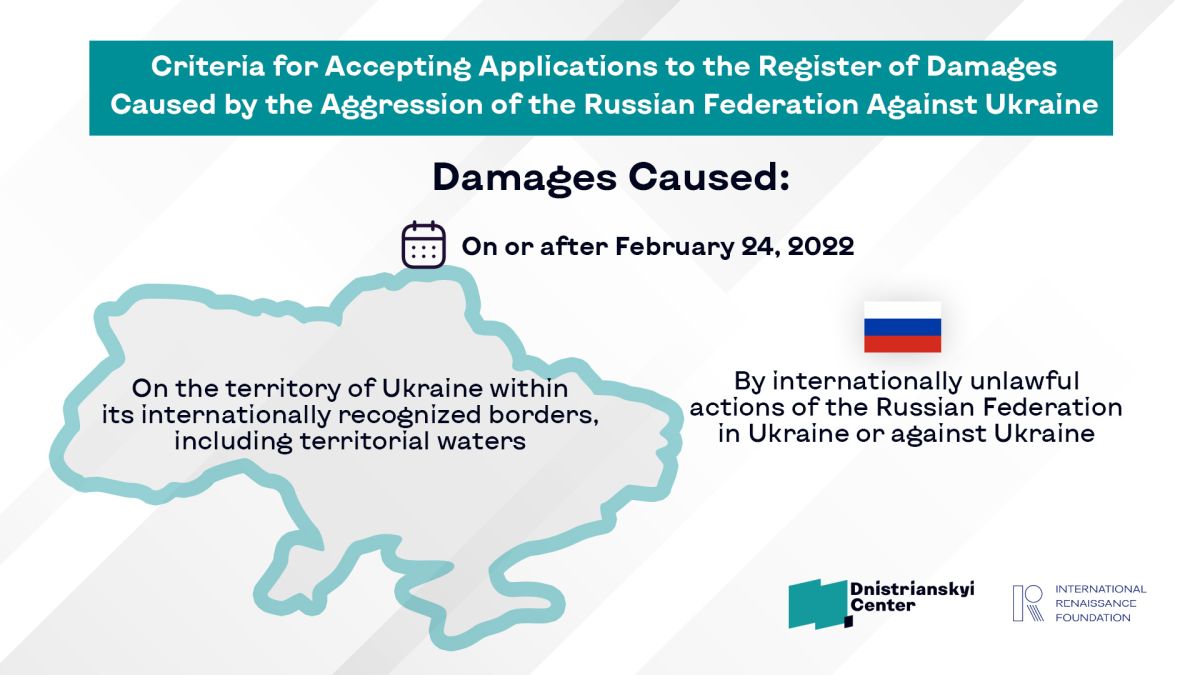
Also in April, the Office of the Register of Damages in Ukraine was established, headed by a well-known Ukrainian lawyer, Ganna Khrystova.
The launch of the Register of Damages and its acceptance of applications in a short time is an important step towards ensuring justice for Ukraine and Ukrainians in terms of compensation for damage. However, even a full-fledged launch of the Register will require solving a number of problems.
The key one – the inability of those who suffered damage before February 24 to file compensation claims – will be discussed in one of our next reports.
The Register should be only one of the three institutional components of the international compensation mechanism, along with the Compensation Commission and the Compensation Fund. At the same time, at this stage, neither the format, nor the legal basis, nor any other aspects of the creation of these bodies are clear.
The fourth component should be an international treaty regulating the procedural aspects of the international compensation mechanism. There are currently no details on its provisions, parameters, etc. Officials’ comments only say that work in this direction is ongoing:
“We have now started negotiations on the terms of this agreement. We have presented our vision of the concept of this agreement, i.e. what legal grounds can be used to make countries parties to it, and the design of this agreement. We envisage that the international agreement should definitely include those countries that have frozen Russian assets... It should be an international and global story.", - last Fall, Iryna Mudra said.
However, the main challenge for the effectiveness of the international compensation mechanism for Ukraine as a whole is the financing of compensation for victims. And the key way to ensure them is to confiscate Russian assets that are frozen abroad.
Confiscation of Russian assets
Justice for Ukraine is impossible without compensation for the damage caused by the Russian Federation’s aggression to the state, society, and all victims. However, the mere creation of appropriate institutional mechanisms at the international level, as discussed above, will not in itself mean justice without actual payment of reparations.
“Another key and difficult issue concerns funding. Although every international claims commission has various conflict-resolution functions, no international claims commission can be considered entirely successful without appropriate funding for paying awards.", - is stated in a position paper authored by Chiara Giorgetti, Markiyan Kliuchkovsky and Patrick Pearsall, published in May 2022.
Over the past year, Russia’s position, which absolutely denies the option of discussing any reparations for the damage caused by its aggression against Ukraine, has not changed. Of course, this issue will be raised in further negotiations on a political settlement, but it is futile to hope for a change in Russia’s position.
In this regard, the only available and realistic source of funding for future compensation to Ukraine is frozen Russian assets abroad. The bulk of them are about $300 bln. in reserves of the Central Bank of the Russian Federation (hereinafter referred to as the “CBR”), which are kept in banks under the jurisdiction of the EU and the G7. And their fate continues to be the subject of active debate.
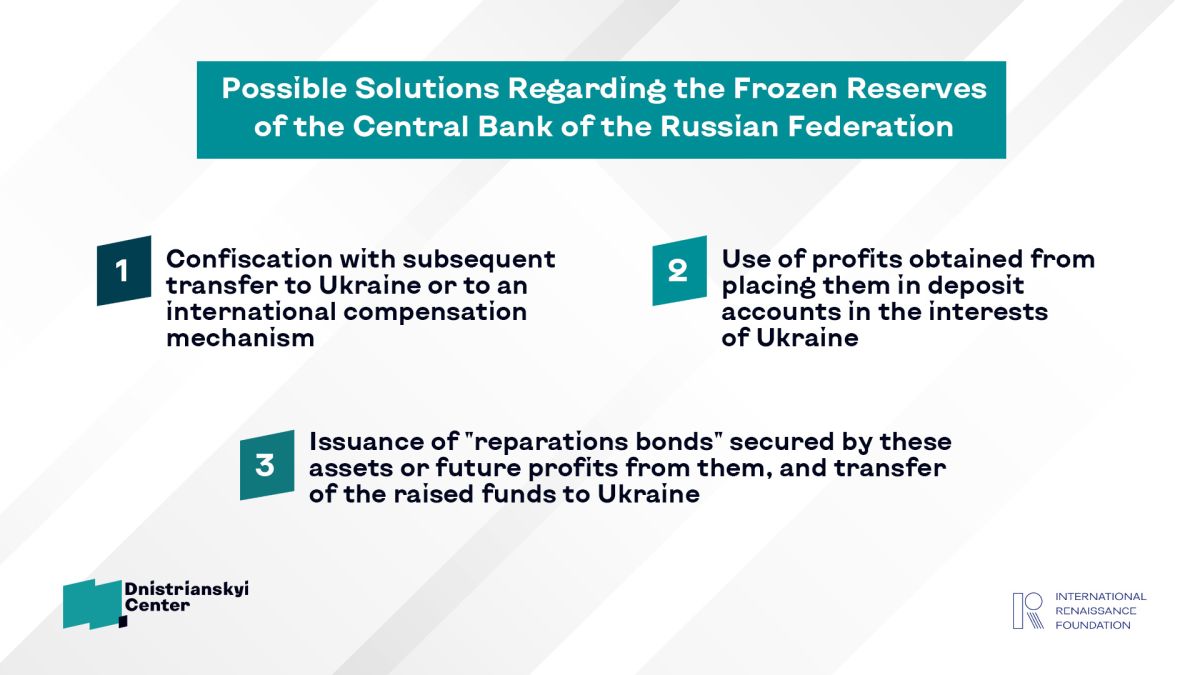
The main legal obstacle to any of these solutions is sovereign (jurisdictional) immunities, the principle that a state is not subject to the jurisdiction of the courts of another state in cases concerning its sovereign actions and property.
Discussions on the applicability of this principle to the sovereign assets of the Russian Federation in terms of aggression against Ukraine have been ongoing since the beginning of the reparations discussions. Ukraine’s consistent position is that the aggressor state cannot enjoy such protection under this international legal instrument:
«If the aggressor state is involved in egregious violations of international law, it can’t rely on the rest international community to punctually observe sovereign immunity no matter what. The aggressor does owe the obligations to make reparations to the victims. Everyone should understand that you won’t be able to hide behind the sovereign immunity,» said Iryna Mudra in her speech in November 2023.
A number of analytical reports by international and national experts were published during the year to support this point – the permissibility of derogation from the doctrine of sovereign immunities in the case of the CBR reserves. The best known and most authoritative one was the memorandum prepared and disseminated in November 2023 by a group of reputable international lawyers with the participation of Dapo Akande, a member of the UN International Law Commission, Philippe Sands, a well-known British lawyer and writer, and others.
“We have concluded that it would be lawful, under international law, for States which have frozen Russian State assets to take additional countermeasures against Russia, given its ongoing breach of the most fundamental rules of international law, in the form of transfers of Russian State assets as compensation for the damage that has resulted directly from Russia’s unlawful conduct”, - is stated in the open letter of the authors of the memorandum and other experts, published on February 21, 2024.
The main idea of these studies[3] is that the confiscation of the CBR assets would be a legitimate countermeasure under international law in response to Russia’s aggression against Ukraine, which is a violation of its obligations erga omnes (to the entire international community) to refrain from the use of force or threat of force. Some authors emphasize that sovereign immunities prohibit confiscation by judicial decision, but not by legislative or administrative decisions. It is also pointed out that the economic consequences of confiscation, which the European Central Bank, for example, warns against, are overestimated.
Despite all the reasoning behind these proposals, many of which have been voiced since the beginning of Russia’s aggression against Ukraine, it is important to have the political will to implement them. Currently, for various reasons and arguments, the key states that manage the frozen reserves of the CBR are expressing precautions about making decisions due to both economic and legal counterarguments.
“We should never act if we don’t obey by the international law and by the rule of law, We should really understand that taking such significant decision, which is to take advantage of the state property, needs a very strong legal basis”, - stated this February the Minister of Economy and Finance of France, Bruno Le Maire.
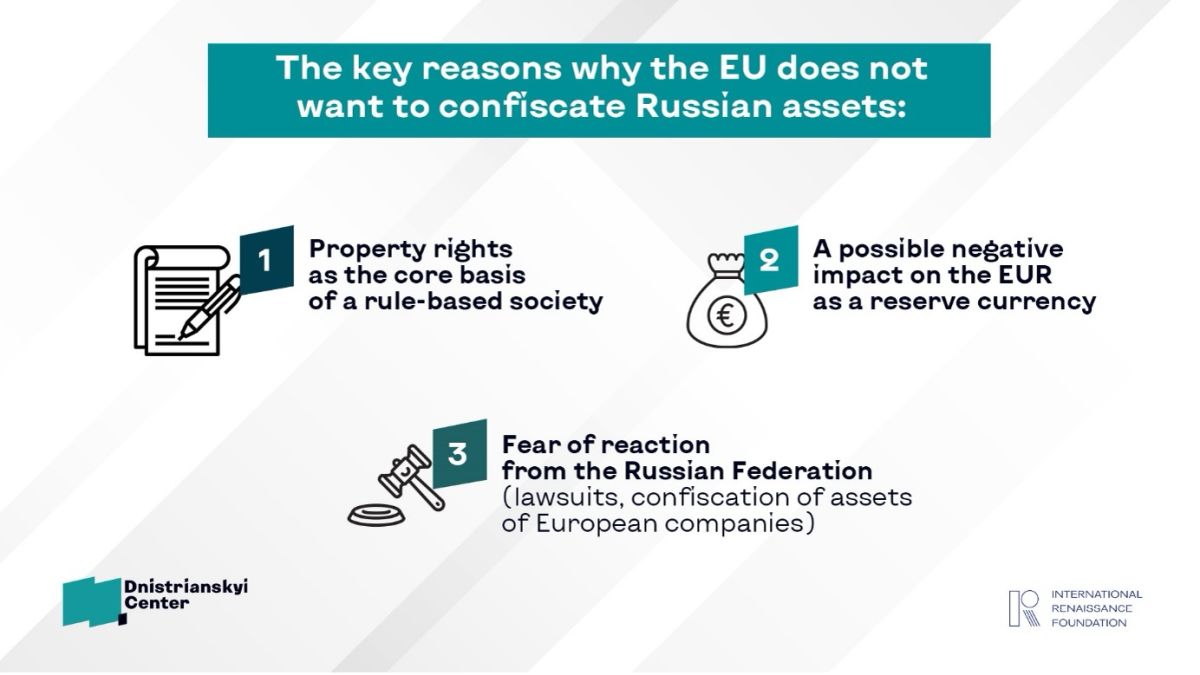
Without the political will, confiscation in the manner envisaged by these proposals is unlikely to be implemented, including because these proposals, despite their validity and authoritative composition of authors, are not formal conclusions. Accordingly, referring to them when making decisions may not be convincing.
Finally, all these conclusions and reports perceive sovereign immunity primarily through the prism of its legal nature, and do not take into account the importance it has for the global economy and international relations, where it acts as a kind of guarantee of trust. This context cannot be taken recklessly, and other states are taking it into account when discussing the decision to confiscate Russian reserves.
For similar reasons, one should not rely on the possibility of confiscating Russian assets at the level of specific jurisdictions. For example, although the adoption of the REPO bill in the United States in April 2024, which allows for the confiscation of Russian sovereign assets, and subsequent statements on this issue caused a wave of excitement, this mechanism is not automatic and requires practical steps and political decisions. And as the example of Canada, which created such a mechanism in June 2022, proves, they may not be adopted at all.
In this regard, it is more realistic to take steps to further utilize the frozen Russian assets and transfer the profits to Ukraine. The biggest step in this direction was taken by the European Union, which in 2024 approved a scheme for using the profits earned from the CBR reserves.
After almost two years of discussions, on May 21, 2024, the Council of the European Union adopted EU Regulation No. 2024/1469: a decision approving the procedure for using revenues from the frozen reserves of the CBR for the benefit of Ukraine. Prior to this, on February 12, the Council adopted a Decision stipulating that starting from February 15, 2024, central securities depositories should separately account for the amount of cash balances and net profit accumulated as a result of immobilization of the CBR reserves.
In the Regulation, the Council established that the profits from these assets earned after February 15 do not belong to the Russian Federation and therefore are not protected by sovereign immunities. These funds should be allocated annually to support Ukraine. It is expected that Ukraine will receive the first tranche of revenues this summer. It is assumed that the profits will be used according to the following scheme:
.jpg)
In addition to the EU’s decision, we can also expect these assets to be used to issue so-called “reparation bonds”. This is an idea that was first voiced in January 2024 and later supported by British Foreign Secretary David Cameron. It envisages the issuance of military bonds by or for Ukraine as collateral for future reparations for Russian Federation’s aggression against Ukraine, if paid.
It is likely that Ukraine could receive USD 50–60 billion in reparations. They will be repaid from future reparations by the Russian Federation, and the CBR reserves or future profits from them will be pledged in case the Russian Federation refuses to pay. It is expected that this plan to use Russian assets may be supported at the G7 summit in Italy in June.
However, in this case, it should be borne in mind that the terms of the reparation bonds (interest rates, purchase discount, and repayment terms) may not be the most favorable for Ukraine. On the other hand, it may not be about attracting, say, USD 300 billion, but about USD 50–60 billion. Therefore, operationally, this may not be the most comfortable option for Ukraine.
Although this decision is the greatest success so far in the process of using Russian assets or their proceeds for the benefit of Ukraine, it should be remembered that its purpose is not to provide compensation for damages, but to support and rebuild Ukraine on an ongoing basis. And financing compensation payments to victims of Russian aggression and to Ukraine as a state remains an unresolved issue.
Confiscation mechanisms of Ukraine
Ukraine has not only demanded that its allies confiscate Russian assets, but has also created an effective mechanism for confiscating assets under its jurisdiction. In May 2022, the Verkhovna Rada adopted Law No. 2257-IX (entered into force on May 24, 2022), which introduces a mechanism for “the recovery of assets of persons in favor of the state during the period of martial law and provided that the relevant individual or legal entity has been sanctioned in the form of freezing assets”.
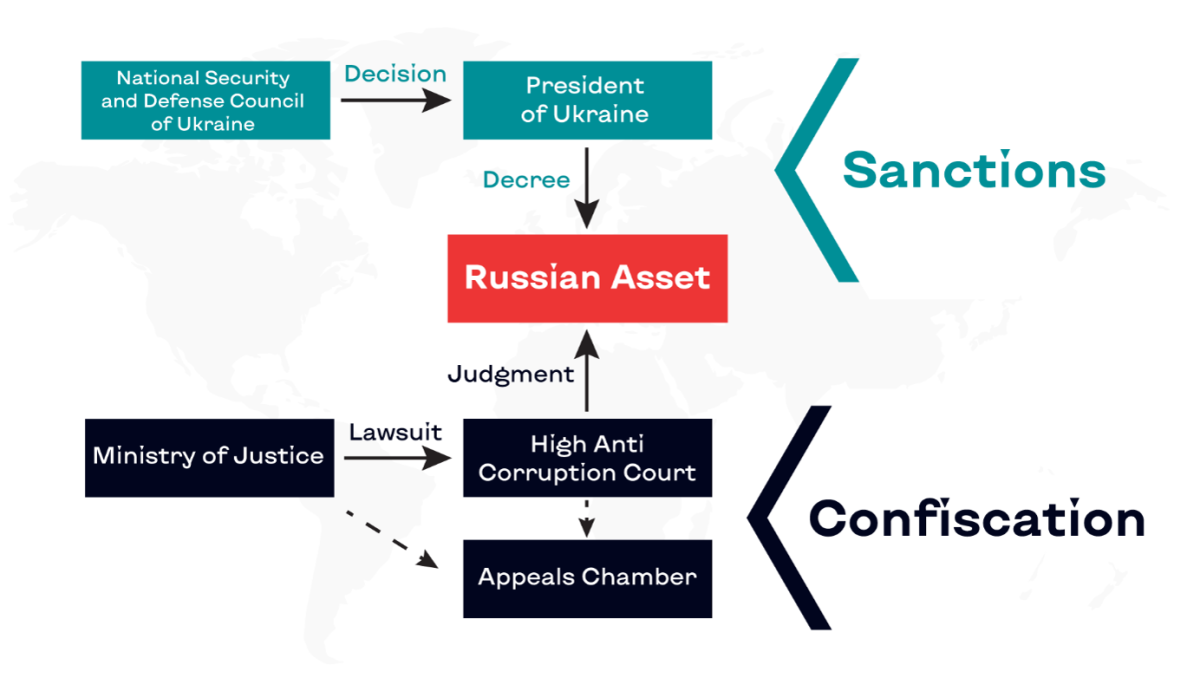
This mechanism can be considered effective – as of the end of May 2024, more than 35 decisions have already been made. At the same time, it is objective – in practice, the Court has refused to confiscate certain assets.
However, it also contained a number of shortcomings, such as critically short procedural deadlines (2 days to file a response to a claim and 10 days to consider the case), which was pointed out by both experts of the Dnistrianskyi Center and international experts.
"The procedure ... may result in the proceedings in a particular case not being fair, either because of the failure to meet the deadlines for filing a response or appeal, or because of the failure to participate in the proceedings," wrote Jeremy McBride in 2023.
The problem was also recognized by the HACC in its decisions, in particular, in the decision on the confiscation of Oleg Deripaska’s assets, the court recognized that due to the complexity of the case, more time was needed to consider it:
"...the legally determined ten-day term for consideration of this case of this category would not be able to ensure the completeness and objectivity of the trial, full competition (the opportunity to know and comment on all the evidence presented to influence the court's decision, to have sufficient time to familiarize with the evidence, the opportunity provide evidence, etc.)".
These shortcomings have already been corrected in the legislation: according to the amendments to the Administrative Procedure Code of Ukraine of July 2023, the person against whom sanctions are imposed has 5 days to file a response to the claim. In such cases, the case is considered by three judges within 30 days from the date of receipt of the claim. Both the plaintiff and the person against whom sanctions may be imposed receive information about the hearing. If one of the parties to the case fails to appear in court, this does not prevent the case from being considered.
However, there are other problems related to the protection of property rights, which, if not corrected in the future, may pose compensation risks for the victims.
Freezing as a criminal law tool. The confiscation mechanism does not contain any freezing tools until the Ministry of Justice files a claim with the HACC. The Ministry of Justice has the right to search for assets that may belong to a sanctioned person, but cannot freeze them until a claim is filed with the HACC, and therefore assets may be lost.
Accordingly, the preliminary freezing of assets can only be ensured through arrest in criminal proceedings at the request of law enforcement agencies.
Such criminal proceedings are often based on far-fetched reasons and do not lead to charges. For example, in the case of Russian oligarch Oleg Deripaska’s company Hlukhiv Quartzite Quarry LLC, corporate rights were blocked due to abuse of power by officials of the State Service of Geology and Subsoil of Ukraine. Although the real reason – the connection of this company’s assets with Russia – is obvious.
A possible solution would be to amend the legislation to clearly specify which assets are subject to freezing and in what order, to require full justification for such decisions, and to allow sanctioned persons to appeal against the freezing decision. It is also advisable to introduce penalties for both the withdrawal of assets subject to sanctions and unjustified criminal proceedings aimed at freezing assets.
The launch of the State Register of Sanctions in January 2024 will optimize these processes, but legislative changes are necessary.
The second problem is proving the connection between the asset and the sanctioned persons, in particular if it is indirect. In 2022–2023, during the court proceedings on the confiscation of Russian assets, the HACC followed the logic that a person who holds a majority of shares in a company actually controls it. The court also took into account such person’s attempts to transfer a share of his corporate rights to alleged nominee owners and evidence of the person’s influence on the company’s management.
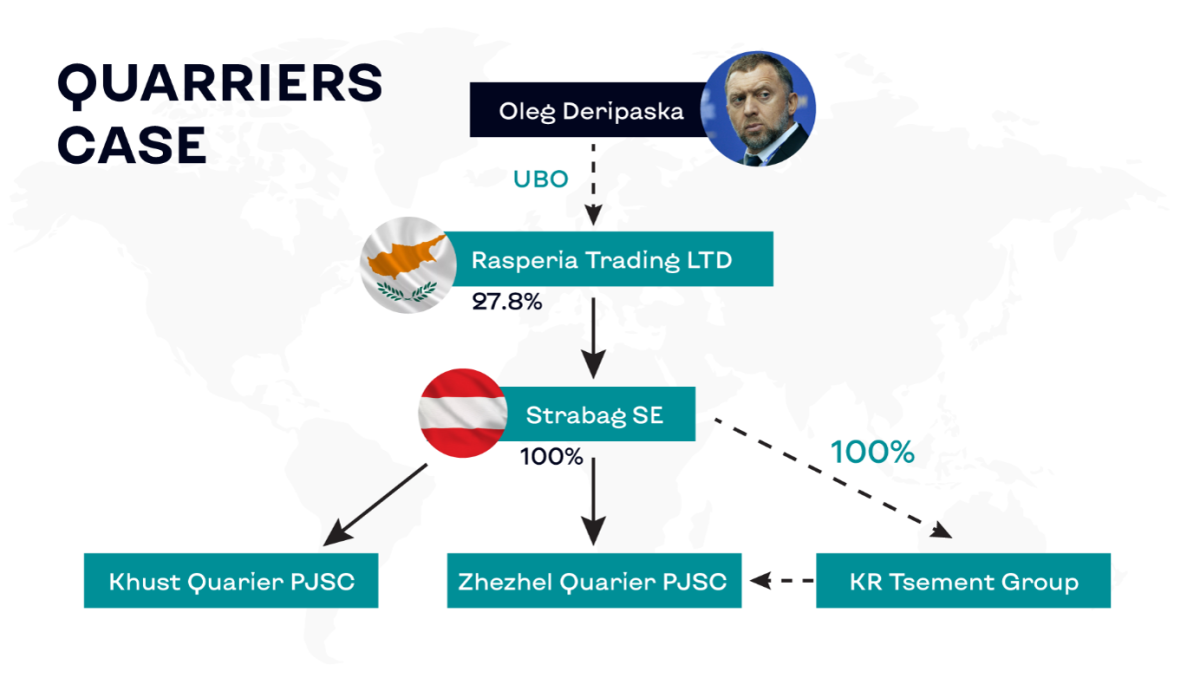
The most striking example is the situation with two quarries, Khustskyi and Zhezhelivskyi, which until November 2021 belonged to the Austrian construction company Strabag SE. Deripaska is a 27.8% co-owner of the company through the Cyprus-based Rasperia Trading Ltd.
A few months before the great war, Strabag SE sold 100% of the shares of Khustskyi Quarry PrJSC and Zhezhelivskyi Quarry PrJSC for about UAH 13 million to the Cyprus-based Samsta Ltd., nominally owned by investment banker Florian Gut in the interests of a group of Ukrainian businessmen.
The Ministry of Justice’s position was that the sale was a fictitious transaction, made to remove the property from sanctions in the interests of Oleg Deripaska, who has actual control over Strabag SE and has already removed assets from sanctions before.
These arguments of the Ministry of Justice are not flawless from a practical and legal point of view. Claims that the buyers acted only in Deripaska’s interests look unconvincing, given their financial strength and business reputation. For example, one of the buyers, Ihor Mazepa, claimed that both quarries operated as part of the Kryvyi Rih Cement holding, rejecting the idea that they were part of a scheme to benefit Deripaska.
While the business purchase model itself, although it raises questions about transparency, is not legally prohibited, it can be used not only to conceal owners but also to protect assets.
On June 16, the HACC Appeals Chamber cancelled the decision of the court of first instance to confiscate Deripaska’s assets in the Khustskyi and Zhezhelivskyi quarries due to “lack of sufficient evidence of the sanctioned person’s ability to dispose of the corporate rights of both companies.
This case proves the need to improve approaches to proving the connection between assets and sanctioned persons. On the other hand, in order to prevent situations of withdrawal of sanctioned property, it is necessary to develop legislative norms that would provide for penalties for evasion of sanctions.
And the third problem is the protection of the rights of non-sanctioned co-owners of assets in the course of their confiscation. Under the Law “On Sanctions”, property can only be recovered as state revenue if the sanctioned person owns it or can dispose of it, including through nominee owners controlled by him or her.
However, Russian assets are often owned by offshore companies, and ownership shares between the ultimate beneficiaries are distributed at the level of the offshore companies. A Ukrainian court can only recover assets located in Ukraine and only in full, or refuse to do so.
The HACC’s case-law shows that currently the confiscation of corporate rights of sanctioned persons is possible only if the corporate rights are divided at the level of a Ukrainian legal entity. And if the corporate rights of a Ukrainian asset are 100% owned by a foreign company, the asset is confiscated in Ukraine as a whole, as the court has no legal grounds to divide the shares in the Ukrainian company. As a result, the rights of non-sanctioned owners are violated.
This issue arose in the case of freezing Alfa Group’s assets, in particular, its stake in the mobile operator Lifecell. The court, at the request of the Security Service of Ukraine, froze 100% of Lifecell LLC, in which Alfa owns 19.8%. The court subsequently corrected the decision by arresting the 19.8% stake at the level of the Ukrainian company, although it was not explicitly allocated.
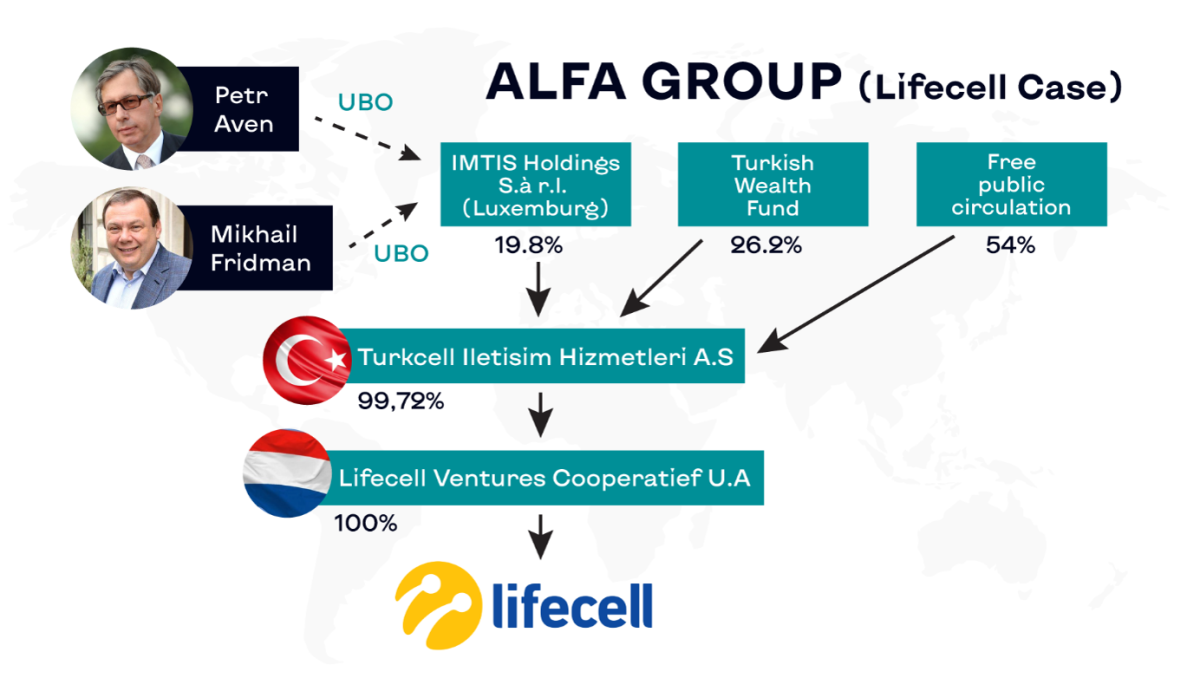
An effective solution would be to expand the powers of the Ministry of Justice and the HACC to confiscate sanctioned assets. The Ministry of Justice could demand the confiscation of all assets in Ukraine with a share of sanctioned persons, and the HACC could allocate the share lost by non-sanctioned owners when making a decision.
This approach would avoid violating the rights of third parties, simplify the confiscation process, and show a commitment to property rights, which are important in a society based on the rule of law.
Efforts are currently underway to address these issues both in the HACC’s case-law and at the legislative level. For example, the decision in case No. 991/8725/23 of January 23, 2024, on the confiscation of assets of Russian oligarch Eduard Khudainatov referred to the confiscation of Alliance Holding LLC. This asset, in addition to the Russian, was also owned by the international oil company Royal Dutch Shell, and was structured at the level of foreign companies. In its decision, the Court resolved that:
"Satisfaction of the lawsuit against "Alliance Holding" LLC would be possible if the law provided an opportunity to compensate for the loss of property rights of non-sanctioned third parties. In particular, one of such mechanisms would be the legal possibility of the court to collect 100% ownership of the Ukrainian asset and, under certain conditions, to recognize the ownership of third parties in proportion to their share in the foreign jurisdiction."
The position of the HACC and the vision set out in the decision largely overlap with the proposals made in 2023 by experts of the Dnistrianskyi Center, in particular in the analytical report “Confiscation of Russian Assets: Experience of Ukraine and Allies (January – September 2023)”.
Legislative solutions are also being proposed, in particular, draft law No. 11195 dated April 22, 2024, “On Amendments to Certain Laws of Ukraine Concerning the Mechanism of Protection of Third Party Property Rights”, which proposes amendments to the Administrative Procedure Code of Ukraine and other laws that introduce a similar mechanism. Although it has been subject to political and anti-corruption criticism, it shows that the movement towards improving Ukraine’s confiscation mechanism has begun.
Conclusions
The second year of work on creating a mechanism for compensation for Ukraine and the government’s work in this area can be assessed as very successful. The establishment and launch of the Register of Damages, practical decisions on the fate of Russian assets and the functioning of the confiscation mechanism in Ukraine within the framework of the HACC prove the seriousness of intentions and the ability of Ukraine and its allies to make decisions on the way to ensuring confiscation.
The key priorities and tasks for the next year include:
- Work on the further development of institutional and contractual instruments of the international compensation mechanism(international treaty, Compensation Commission and Compensation Fund). It is unlikely that they will be created during this period, but significant progress can be made in the process. The Register of Damages may also start accepting applications for compensation in all categories.
- Making further decisions on the confiscation of Russian assets abroad and at the multilateral level. In addition to using the profits from frozen Russian assets for the benefit of Ukraine, it is possible that “reparation bonds” will be issued as a medium-term solution to their fate. As for the long-term solution – the complete confiscation of the CBR reserves – it is advisable to continue to develop legal and political arguments.
- In this context, it will be important to ensure maximum international support for these steps. The key indicators in this regard should be quantitative – 50%+ of the membership of the UN General Assembly, and geographical – the widest possible representation of member states from outside the European continent.
- When lobbying for the next steps, it is also necessary to clearly define what funds and to what extent should be allocated for the purposes related to compensation for damages. If the use of revenues from the CBR reserves for ongoing support of Ukraine is justified, then it should be further stipulated which funds and to what extent should be allocated to the Compensation Fund. Otherwise, compensation for victims of aggression risks being left without actual funding.
- It is also important to make the process of creating and developing compensation mechanisms more open, involving Ukrainian civil society, academia, and the professional community. The representation of the legislative and executive branches of government in these processes should also be expanded, ensuring a unified position and vision. Otherwise, on different platforms, representatives of these circles will advocate different, possibly mutually exclusive approaches to the principles of compensation to Ukraine, which may adversely affect the dynamics of the relevant processes.
- If the HACC-based confiscation mechanism is implemented in Ukraine, it is expected that the legislation will be amended to regulate the possibility of freezing sanctioned assets even before the Ministry of Justice goes to court, as well as to allow for the division of shares of sanctioned persons from non-sanctioned persons at the level of a Ukrainian company. This will increase the transparency of the confiscation process and prevent violations of the rights of third parties who are bona fide owners.
- Although the HACC has not been very active in making decisions on the confiscation of Russian assets recently (only 5 such decisions were made in the first quarter of 2024), we can expect the Ministry of Justice’s claims and the Court’s case-law to intensify in the near future. This may apply to both rulings in pending cases (e.g., the cases of IDS Borjomi and Morshynska (regarding Alfa Group shares)) and new cases (e.g., the case of the energy assets of the Luzhniki Group).
- As the number of assets transferred to the SPFU or managed by ARMA grows, the questions of transparency and efficiency of their management will be increasingly raised. This will require the development of a comprehensive management and capitalization strategy, as these funds should be used for the benefit of victims of the Russian aggression. How – whether by transferring them to the Compensation Fund or through other mechanisms – will also be a question to which the government must give a clear answer.
These are only some of the challenges and tasks that Ukraine will face on its way to confiscating Russian assets in 2024–2025. But the progress of the past period gives us hope for further success. However, given Russia’s intentions to counter these steps both publicly and covertly, all stakeholders should be prepared for difficult legal and political confrontations.
The material was prepared with the support of the International Renaissance Foundation as part of the project "#Compensation4UA/Compensation for war losses for Ukraine. Phase III: Advocacy of steps to guarantee a sustainable compensation strategy"