September 27, 2024
The Politics of Memory: How Chile Commemorates Victims of Terror
Author: Ivan Horodyskyy
Chile is one of the most distant countries from Ukraine. Nevertheless, it actively supports us in countering Russian aggression: Chile has supported all six UN General Assembly resolutions recognizing and condemning Russian aggression adopted in 2022-2023, and has also joined the communiqué of the 2024 Peace Summit in Switzerland.
However, Chile and Ukraine may be even closer than it seems: during the military junta from 1973 to 1990, this Latin American country experienced a period of terror that affected tens of thousands of Chileans. Decades later, Chilean society continues to overcome and heal the wounds of that period.
And the lessons on how this experience is endured, how the politics of memory is shaped, may be even more valuable for Ukraine and our society with international support.
Victims, witnesses, and perpetrators
On our first evening, Cristian, the Chilean lawyer coordinating our visit, mentions that his family—his grandfathers and uncles—supported Pinochet. "As a teenager, I was the first in my family to speak out against the regime." And he explains the family's stance simply: "They were wealthy. And they were scared."
The family's wealth was also evident in the fact that he studied at the law faculty of the most prestigious Chilean university—the Pontifical Catholic University of Chile. "This is a very conservative place. They all supported Pinochet there. Researchers from the law school wrote the Constitution for him."
He talks about it very sincerely and emotionally. And he concludes: "It was the most terrifying place to study ever."
...We are talking about the university at another local university, the Jesuit University of Alberto Hurtado, which has a more liberal reputation. Here we meet with local teachers and human rights activists working on issues of justice and understanding.
We discuss reparations and the problems that arise in this regard. Victims of the Pinochet regime or their relatives have indexed pensions and medical support. With the latter, various situations can arise: "There may be a situation where the budget allocates funding for only 5 cancer surgeries per year, while 25 are needed," explains Elisabeth, the head of the Human Rights Department.
Such medical programs for victims and their relatives are a separate budget item. There is also separate grant funding for memorial projects.
I ask Elizabeth if there are examples of groups that have been excluded from the reparations programs or recognized as ineligible for compensation. Yes, there are such groups: "These are young soldiers who were forcibly mobilized at the beginning of the Pinochet regime." A book has been written about their fate, but their right to recognition as victims and compensation has been denied.
"The problem is that they are both victims and perpetrators at the same time. Both witnesses to the crimes and those who concealed them," she explains. And the memory of these crimes is not concealed but continues to be contemplated.
"Don't forget me"
"In the first months following Pinochet's coup, all military bases and police stations were filled with suspects of disloyalty. And then torture centers like this one appeared," Christian recounts.
We are at Londres 38, one of the torture centers in the heart of Chile. It is located in a prestigious building from the 1920s, which was used by DINA—the local intelligence agency—for the detention and interrogation of members of leftist parties in the period from 1974 to the end of 1975.
"At first, they didn't know how to torture," says Erika, the museum's director, "Many people died almost immediately. But over time they gained experience and the torture sessions became longer."
Erika is already in her seventies, although she looks younger. She is one of the victims and was held in this very torture center along with her husband. She survived—her husband disappeared, and his fate remains unknown.
"The missing" are probably the largest group of victims of the Pinochet regime. It is clear that after 50 years, none of them are still alive. However, the uniqueness of this category seems to highlight the entire tragedy of these people.
On the wall of one of the rooms, there are 14 portraits of women who were held here and also disappeared; their fate remains unknown. Erika, the museum director, describes them as highly intelligent women, among whom were poets and artists.
She knew one of them—Mariel Dockendorff Navarrete. A poem she wrote from Londres,38 has survived to this day:
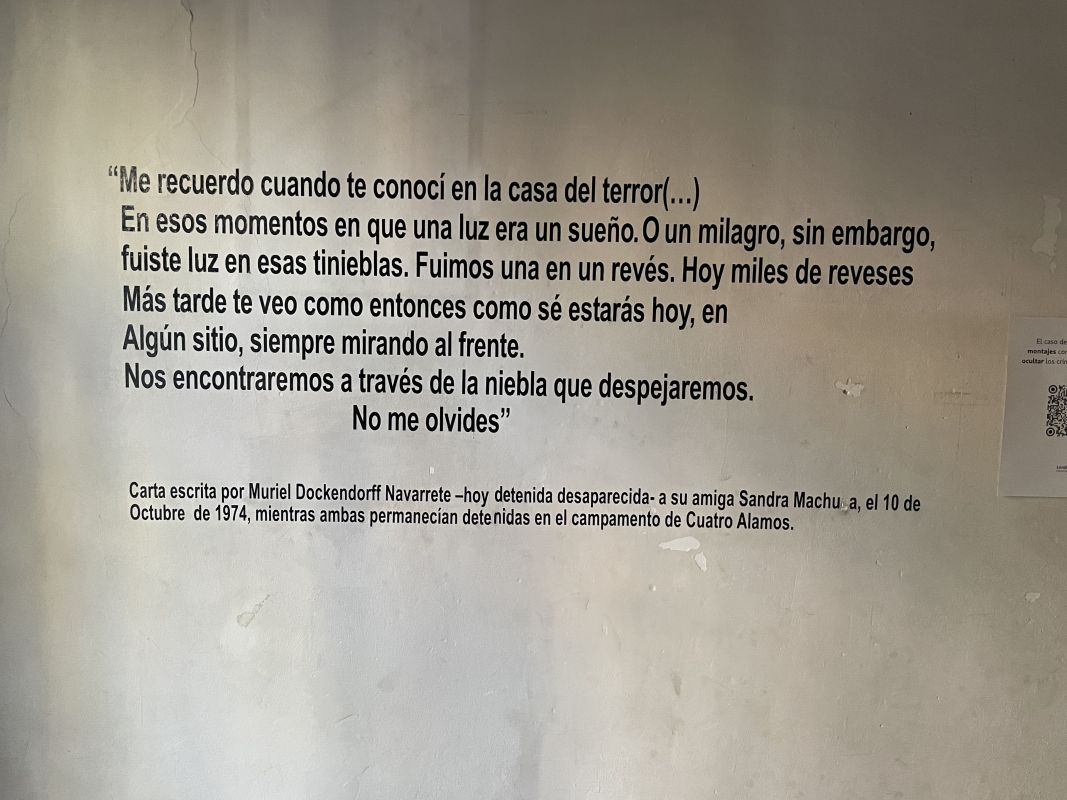
"I remember the moment I met you in that house of fear (...)
When light was just a dream. Or a miracle. But you became the light in that darkness. Together we were whole in our shared misfortune. Today, thousands of misfortunes fill the day.
Later, I'll see you as you are now, somewhere, always looking forward.
We'll meet through the fog that we will dispel.
"Don't forget me"
The next day, we find a photo of María in the Museum of Memory and Human Rights (esp. Museo de la Memoria y los Derechos Humanos). This vast and modern space dedicated to the victims of the junta is truly impressive. On a large wall spanning two floors are thousands of photos of the victims. On a nearby screen, you can find the location of a photo by the victim's name and light a virtual candle.
We approach another wall featuring a world map where countries are shaded in blue and black. The blue marks the countries that provided refuge to the refugees, while the black indicates those that did not. But it’s strange: Greenland and Alaska are marked in black, even though Denmark and the USA are in blue.
One of the tour guides, also named María, shares that her family initially emigrated to Spain, but later her grandmother moved to the United States, while her mother returned to Chile with her.
Overall, it’s a common practice for memory institutions to be headed and staffed by survivors or their family members. Alejandro Núñez is the director of Villa Grimaldi—museum and a former torture station located on the outskirts of Santiago, which was also situated in a former wealthy villa with an incredible view of the mountains.
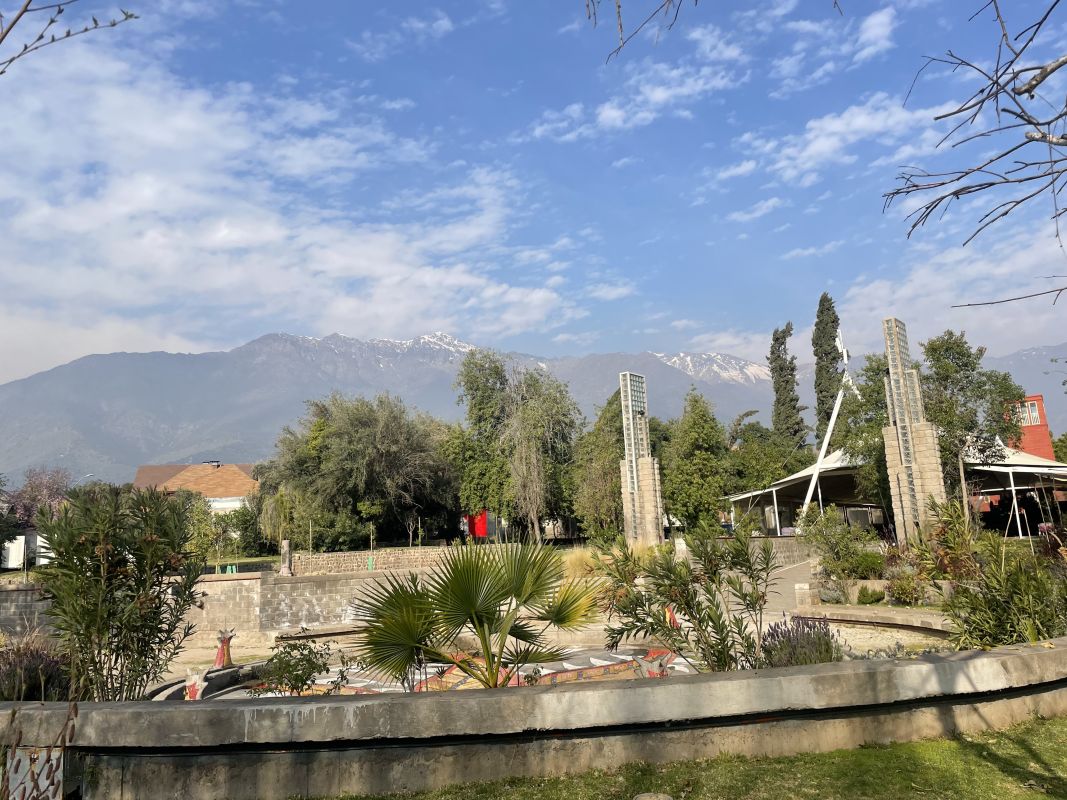
Alejandro was imprisoned here when he was 20, and although he appears calm on the outside, his stories resonate with deep emotions. "In cells measuring one meter by one meter, we were held three or four at a time," he shows us a wooden replica of the small one-meter square space where prisoners were kept at the Villa. "We took turns sitting, but when someone was brought in after being tortured, we all made room for him so he could at least lie down partially."
The spots near the doors of the cell were also important, where there was a small hole for ventilation. "I was kept here in summer, and we took turns at the hole to breathe. But in winter, there were other problems."
Alejandro survived—unlike many prisoners whose tortured bodies were tied to railway tracks and dropped from helicopters into the ocean at Quintero Bay as part of the “Puerto Montt operation". Later, Villa Grimaldi was almost completely destroyed to cover up the evidence, but after the fall of the Pinochet regime, victims and their relatives established a memorial complex on its ruins.
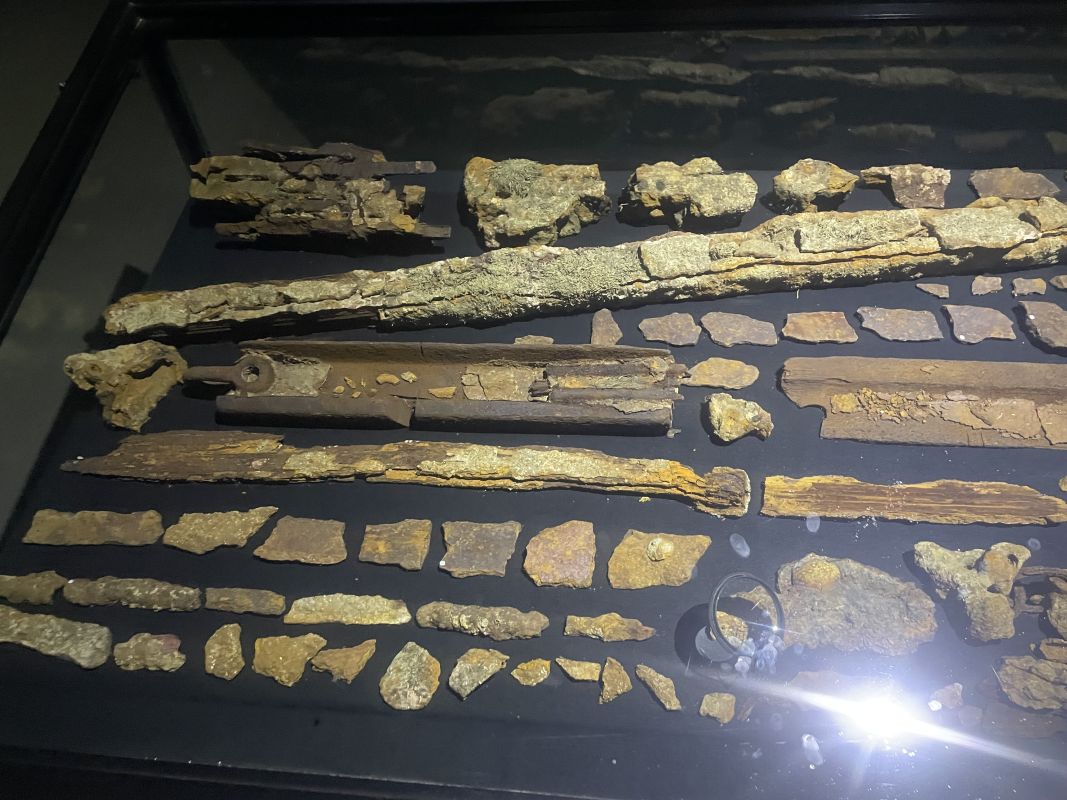
All the signs at the Villa are placed on plaques in the ground. The director explains this symbolically—during the time of the junta, people would lower their eyes to avoid noticing what was happening.
And although all these places are maintained by the victims, they are alive outside this space.
"Chilean school year starts on March 1, and from that day until Christmas we have school tours all the time," says Núñez. "The only problem is that we can't hold two at the same time." Alos, according to the director of the Museum of Memory, researchers and students can freely work in the museum and its archives.
Indiferencia
Moreover, although Chileans share much about their experiences in truth-telling and reconciliation, as well as the work of Truth Finding Commissions, there is a sense that they do not consider their experience to be entirely successful. Hugo, a professor of sociology of law at the Hurtado University, refers to Australia's experience in response to my question about recommendations for how authorities should acknowledge their guilt to the public. And Minister of Justice, speaking about the main challenge of overcoming historical legacy, talks of "indiferencia" (indifference).
There are other issues as well—for Villa Grimaldi and many other memorial sites, it's funding. They are calling for the adoption of a law on memorial sites, so that in 30–40 years, they can continue to exist and operate.
When the victims and their close relatives are gone.
... In the square in front of La Moneda Palace, among the monuments to Chile's most prominent presidents, there is a monument to Salvador Allende, who died during the storming of the palace by the junta in 1973. In this sense, he is a winner.
I also notice that among the thousands of graffiti on the streets, there isn't a single one dedicated to the junta or Pinochet. However, when I suggest that this chapter of history has been closed, my interlocutors smile broadly and respond with great caution, as if this topic still deeply resonates and is being felt.
And the main impression from visiting memorial sites and speaking with victims and experts is that neither politics nor the figures of Pinochet or Allende are in the center of their focus. They are about history, facts, the fates of thousands of victims, and their suffering.
And their main goal is to prevent those horrors from happening again.
Chile's experience, although it is not related to armed aggression, can be very significant for Ukraine. First of all, it emphasizes that the fate of the victims of crimes and the memory of them should be at the center of the politics of memory. And such politics is no less an important form of reparations than financial compensation.
Ukraine is just beginning a long and complicated journey of understanding and working through the memory of crimes and the fate of their victims. And the Chilean experience, if studied and properly understood, can serve as an important guide on this path.
The material is prepared based on the outcomes of the visit by a delegation of Ukrainian civil society organizations that took place in August 2024, supported by the Open Society Foundation and the Human Rights and Justice program of the International Renaissance Foundation.