УКР | ENG
logo
  • About
  • Projects
    • Compensation for Damages Caused by Russia’s Military Aggression
    • Security Agreements of Ukraine
    • Artificial intelligence and justice
    • Post-War Reconstruction
    • Others
  • Team
  • Contacts
  • Dnistrianskyi Center
  • /
  • Updates
  • /
  • Military Justice Reform in Ukraine: Assessing the Merits of Using Military or Civilian Courts and Six Elements of a Credible Military Justice System

March 27, 2025

Military Justice Reform in Ukraine: Assessing the Merits of Using Military or Civilian Courts and Six Elements of a Credible Military Justice System

One question presented in the context of Russia’s war of aggression against Ukraine is whether the Ukrainian Armed Forces (UAF), and by extension the security of Ukraine, would be better served by a system of military justice that relies on the adjudication of cases in civilian courts or in a separate military court system. 

This “White Paper” summarizes the advantages and disadvantages of each option. However, the paper also identifies six requirements to designing and implementing a credible military justice system, whether that system utilizes military courts, civilian courts, or a hybrid model as in the United States. The paper closes with a discussion of the relationship between command climate, military justice, and recruiting. A credible military justice system maintains good order and discipline but also holds leadership accountable for the well-being of those they lead. This is true in war as well as during peace. 

The author - James E. Baker, Director Syracuse University Institute for Security Policy and Law, Professor of Law Syracuse University College of Law, Professor of Public Administration, Maxwell School of Citizenship and Public Affairs. The author is a former Marine Corps infantry officer and formerly a Judge and Chief Judge of the United States Court of Appeals for the Armed Forces. 

Download the White Paper “Military Justice Reform in Ukraine: Assessing the Merits of Using Military or Civilian Courts and Six Elements of a Credible Military Justice System”.

Last updates
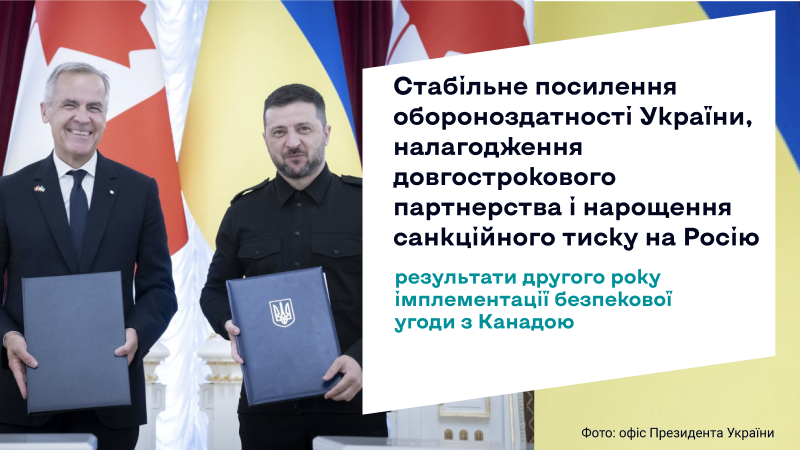
  • Strengthening Ukraine’s Defense Capabilities, Building Long-Term Partnership, and Increasing Sanctions Pressure on Russia: Results of the Second Year of Implementing the Ukraine–Canada Security Agreement
    Strengthening Ukraine’s Defense Capabilities, Building Long-Term Partnership, and Increasing Sanctions Pressure on Russia: Results of the Second Year of Implementing the Ukraine–Canada Security Agreement
    June 30, 2026
  • Compensation for Ukraine: Results of the Fourth Year of Work on Establishing Compensation Mechanisms
    Compensation for Ukraine: Results of the Fourth Year of Work on Establishing Compensation Mechanisms
    June 19, 2026
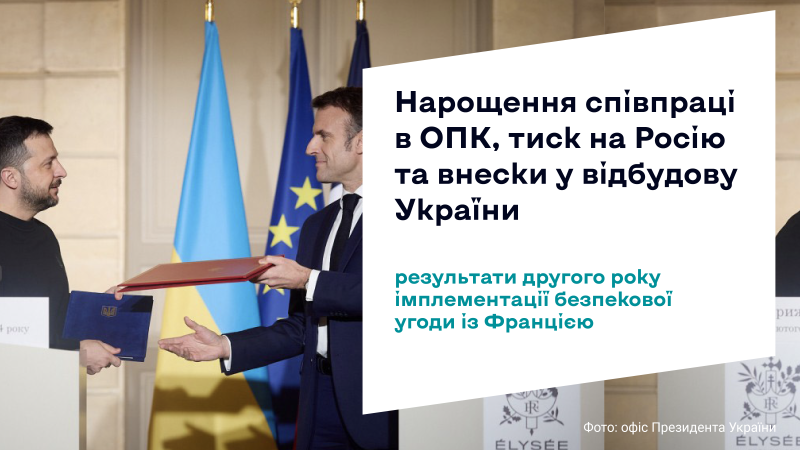
  • Expansion of Defense Industry Cooperation, Pressure on Russia, and Contributions to Ukraine’s Reconstruction: Results of the Second Year of Implementing the Security Agreement with France
    Expansion of Defense Industry Cooperation, Pressure on Russia, and Contributions to Ukraine’s Reconstruction: Results of the Second Year of Implementing the Security Agreement with France
    June 4, 2026
  • Transition to global leadership in supporting Ukraine: results of the second year of implementation of the security agreement with Germany
    Transition to global leadership in supporting Ukraine: results of the second year of implementation of the security agreement with Germany
    April 23, 2026

logo
  • Privacy policy
  • Intellectual property protection policy
  • Support us
  • Contacts

© 2026. Dnistrianskyi Center